
A baby who survived and a fellowship that will bring better care to countless newborns in Ethiopia
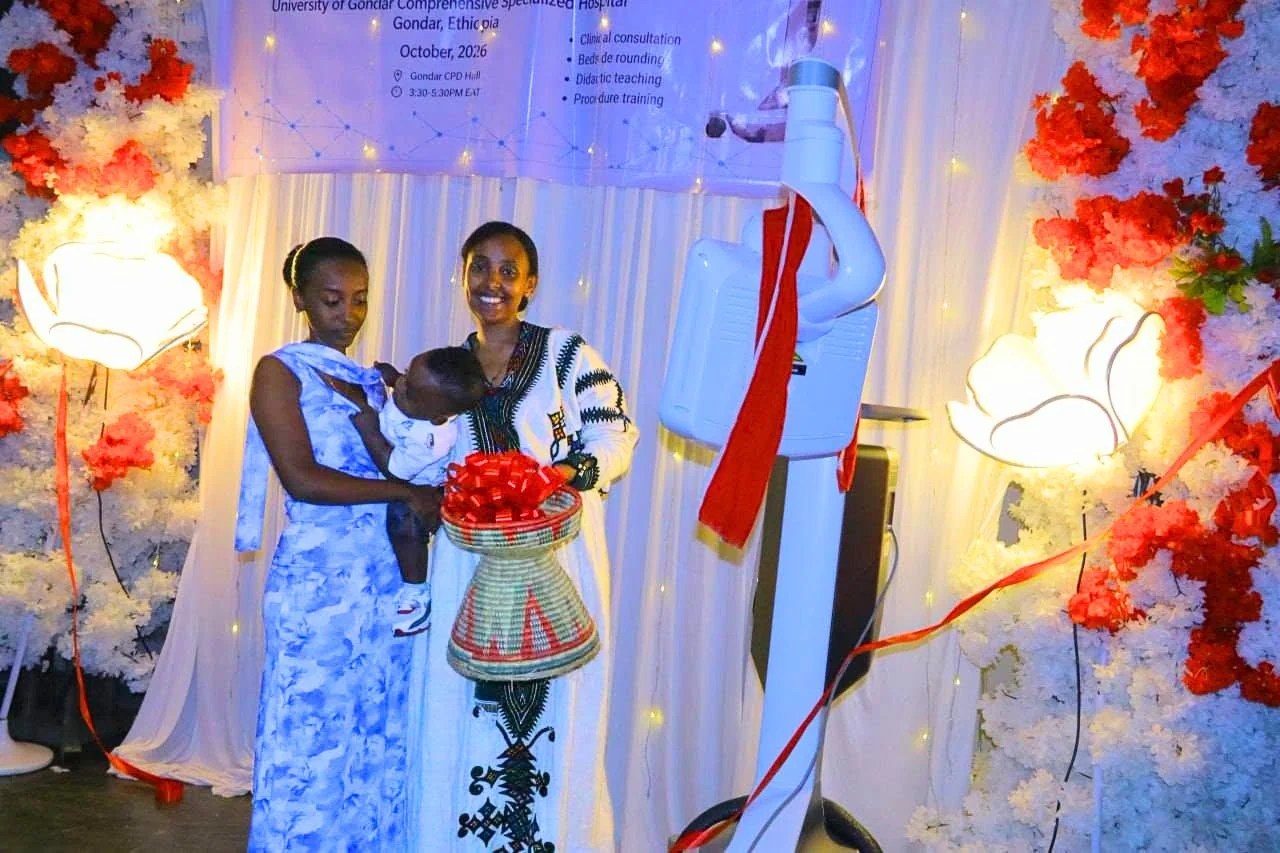
Dr. Martha Solomon with the boy who inspired the telehealth device’s name, and his mother, at the launch ceremony.
A telehealth device named in honor of a baby who beat the odds will connect clinicians in Gondar, Ethiopia with neonatologists around the world as a local pediatrician trains to become a neonatologist the area’s first.
The University of Gondar Comprehensive Specialized Hospital manages more than 5,000 deliveries each year, but there is currently no neonatologist in Gondar to care for the smallest and sickest of those newborns. Pediatricians at the hospital care for them without structured neonatal specialty training. This leave families who need more specialized care facing a journey of hundreds of miles to capital, which is often not an option because of cost or their newborn is too fragile to travel. On October 16, World Telehealth Initiative launched a hybrid neonatology fellowship at Gondar Hospital to begin changing that.
Learning at the bedside, with help from around the world
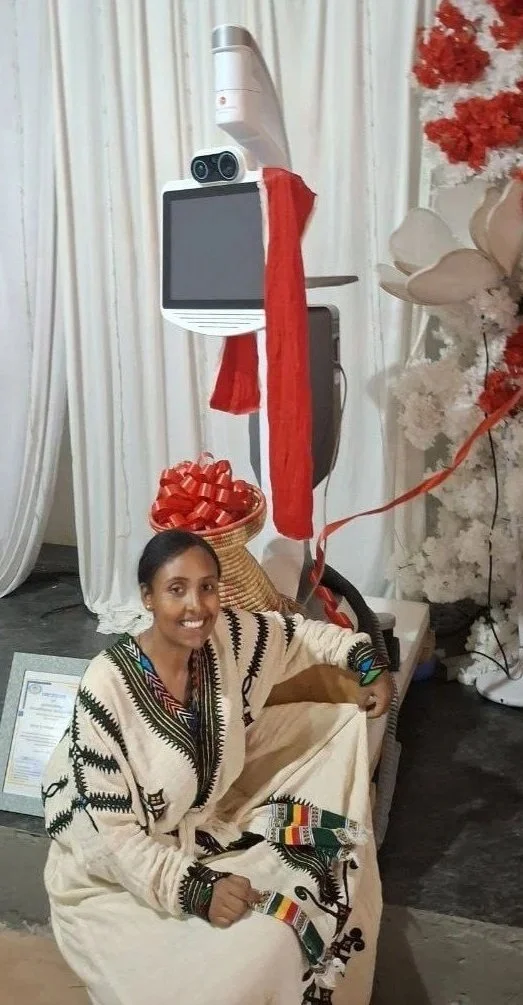
Dr. Martha at the launch ceremony with the telehealth device.
At the center of the fellowship is Dr. Martha Solomon, a pediatrician in Gondar with ten years of clinical experience who will serve as its first fellow. Through the telehealth device, she will take part in real-time bedside consultations, lectures, and clinical training with neonatologists in Ethiopia and abroad, all without leaving the hospital where she works.
The hospital serves a catchment area of more than 13 million people. “We look forward to the opportunity this opens for training and hope to deepen our knowledge and skill in specialized neonatal care, which is very important for us,” Dr. Martha Solomon shared.
A device named for a baby who survived
During the launch ceremony, the team named the telehealth device in honor of a baby who was born very prematurely at the hospital. He faced respiratory distress, hypothermia, and an intraventricular hemorrhage, among other complications, and he survived thanks to the care of Gondar’s nurses and pediatricians. Now a year and a half old and thriving, he attended the launch with his mother. The hospital team managed his complications without a neonatologist on site. The fellowship is designed to build that specialized expertise in Gondar.
From Gondar to Richmond, and back again
The fellowship will be led by Dr. Miheret Yitayew, who attended medical school at the University of Gondar before moving to the United States, where she is now a neonatologist at Children’s Hospital of Richmond in Virginia and leads the NICU’s Small Baby Program for extremely preterm infants.
Her hope is that the technology and the fellowship will help save newborn lives and eventually extend similar specialist-supported care and training to hospitals across the region. The device had a journey of its own to reach Gondar, which you can [read about here].
Beyond one fellow
The long-term goal is a sustainable neonatal training program in Gondar that can grow to reach other hospitals. Dr. Mulat Asrade, Head of Pediatrics and Child Health, said that having real-time global subspecialty collaboration at the bedside will further empower local teams and strengthen clinical training to improve care for vulnerable infants. The aim is to build clinical expertise, expand access to specialized knowledge, and improve outcomes for newborns and families across the region.
The baby at the launch is a reminder of what Gondar’s dedicated clinicians can already do, and this fellowship will give them more specialized training and a global network of neonatologists to turn to as they care for the next baby who arrives too soon.