
Meet Dr. Mosharaf: Connecting care to Bangladeshi communities
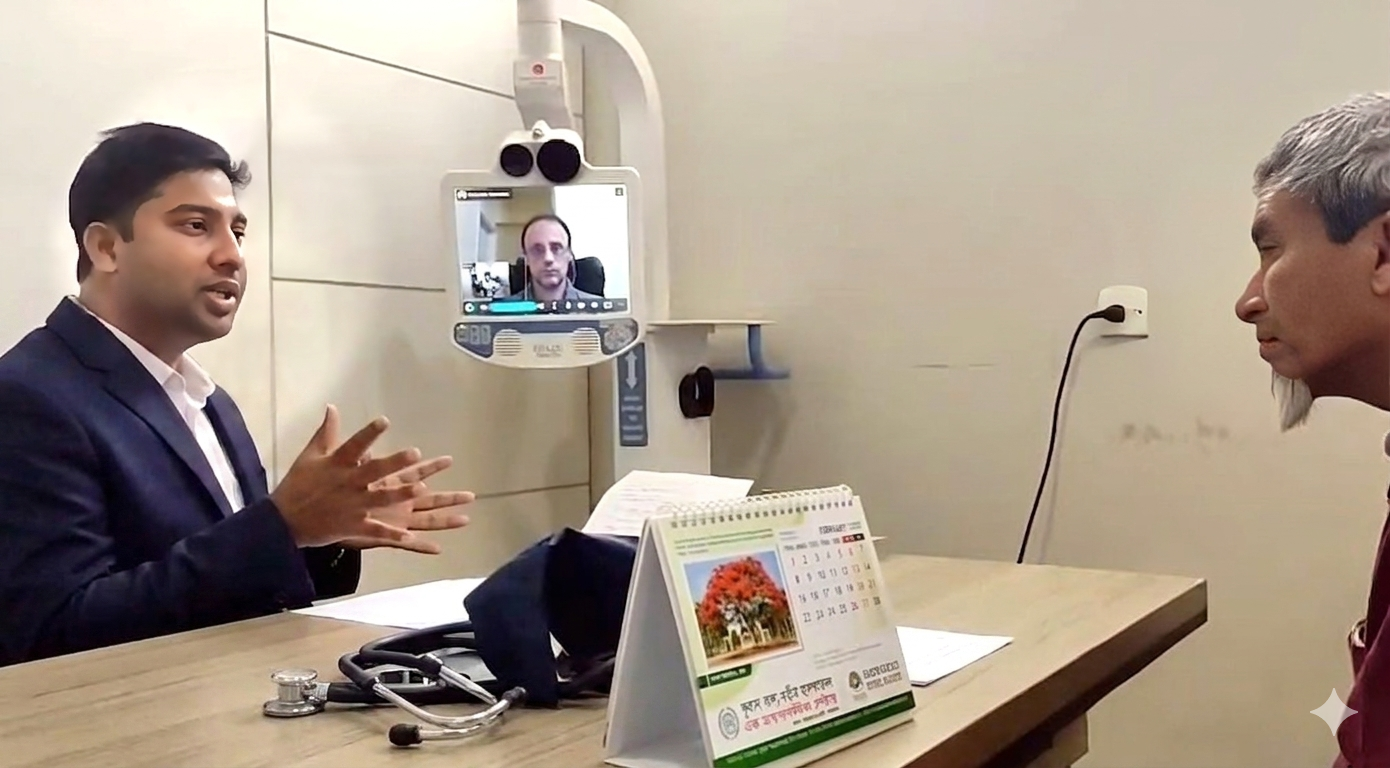
A patient sits in a hospital in Bangladesh, speaking to a doctor thousands of miles away. Dr. Mosharaf Hossain sits at the center of the telehealth consult, translating language and clinical findings, and collaborating with the international specialist on the diagnosis and treatment plan.
Thanks to his dedication and hard work, patients in Cox’s Bazar, Bangladesh can access specialized care that was previously unavailable, from experts across the world. This access is often lifechanging or lifesaving.
At HOPE Hospital in Cox’s Bazar, Dr. Mosharaf wears many hats. As a Senior Medical Officer, he cares for patients across the emergency, pediatric, and general medicine departments. He also serves as the Telemedicine Coordinator at the hospital, partnering with World Telehealth Initiative (WTI) to connect local patients with global medical specialists.
Balancing clinical responsibilities, a hospital leadership role, and overseeing the telehealth program at HOPE Hospital is no small task. This role is especially important given the community HOPE Hospital serves. Cox’s Bazar is home to mostly middle-class and poor residents, who speak a variety of languages, with different cultures and religions. The area also hosts one of the largest refugee camps in the world, which places heavy demand on already limited local healthcare services.
Building trust through community engagement
One of Dr. Mosharaf's most important contributions is increasing awareness and acceptance of telehealth throughout the region.
For many patients, Dr. Mosharaf is the first person introducing them to telehealth, helping them understand how the process works. He states "Telemedicine is a new concept for Bangladesh, so patients may be confused about what will happen throughout the session.”
Introducing a new model of care requires building trust. Dr. Mosharaf and the HOPE Hospital team actively engage with community leaders, families, and local organizations to educate residents about telehealth and the services available to them. Their outreach efforts help telehealth become a familiar and trusted healthcare resource throughout the region. As awareness has grown, so has engagement.
Dr. Mosharaf explains that more patients are now choosing to participate in telehealth consults. "Patients are liking the telehealth sessions because the consulting doctors from WTI are very helpful … they are listening to the patient deeply and carefully, as well as encouraging the patient to participate in the discussion. That's why patients are liking our technique and approach - they participate in decision-making and the discovery process. Patients are happy.”
Strengthening care through collaboration
The partnership provides opportunities for local providers in Bangladesh to learn from specialists across a range of disciplines, while ensuring patients have access to expertise that may not otherwise be available locally. This builds local expertise to improve healthcare, long term.
Through regular telehealth consultations, Dr. Mosharaf has developed strong working relationships with healthcare providers across the world, such as Dr. Eduardo Vicentim, a family medicine physician in Brazil, and Dr. Mushfeka Sharif, an internal medicine doctor originally from Bangladesh and now living in California.
Dr. Mosharaf shares: “I communicate often about patients in between sessions through WhatsApp. That is helpful for me as well as for the patients… if any changes or if any issues arise with patients’ health in between sessions, then immediately I can communicate with the related consultant. I am communicating with Dr. Eduardo Vicentim a lot, and he's always supporting me within a very short time... As well as Dr. Mushfeka Sharif also helped me a lot.”
Reflecting on the partnership, he said: "I would like to thank everybody… you are working from abroad, but I am not feeling that you are abroad. You are just beside me."
Supporting a time of growth
The WTI program is important to HOPE. Historically, the hospital focused on maternity and fistula care. The organization will expand its services in January 2027. They will transition toward becoming a general hospital, with access to specialist expertise.
Dr. Mosharaf shares, “The telehealth program is a resource for us because we have lots of foreign doctors from many other specialties that are not available in our regular hospital setup."
Looking ahead
Dedicated physicians like Dr. Mosharaf are essential to the success of global health partnerships. His hard work and commitment are increasing access to specialized care, changing health outcomes for patients in Bangladesh, and strengthening the local healthcare system.
He shares: "I feel proud that I am a part of WTI."