
How one hospital transformed challenges into connection
What happens when a rural hospital refuses to let geography, lack of internet, or constrained resources determine the quality of care its patients receive?
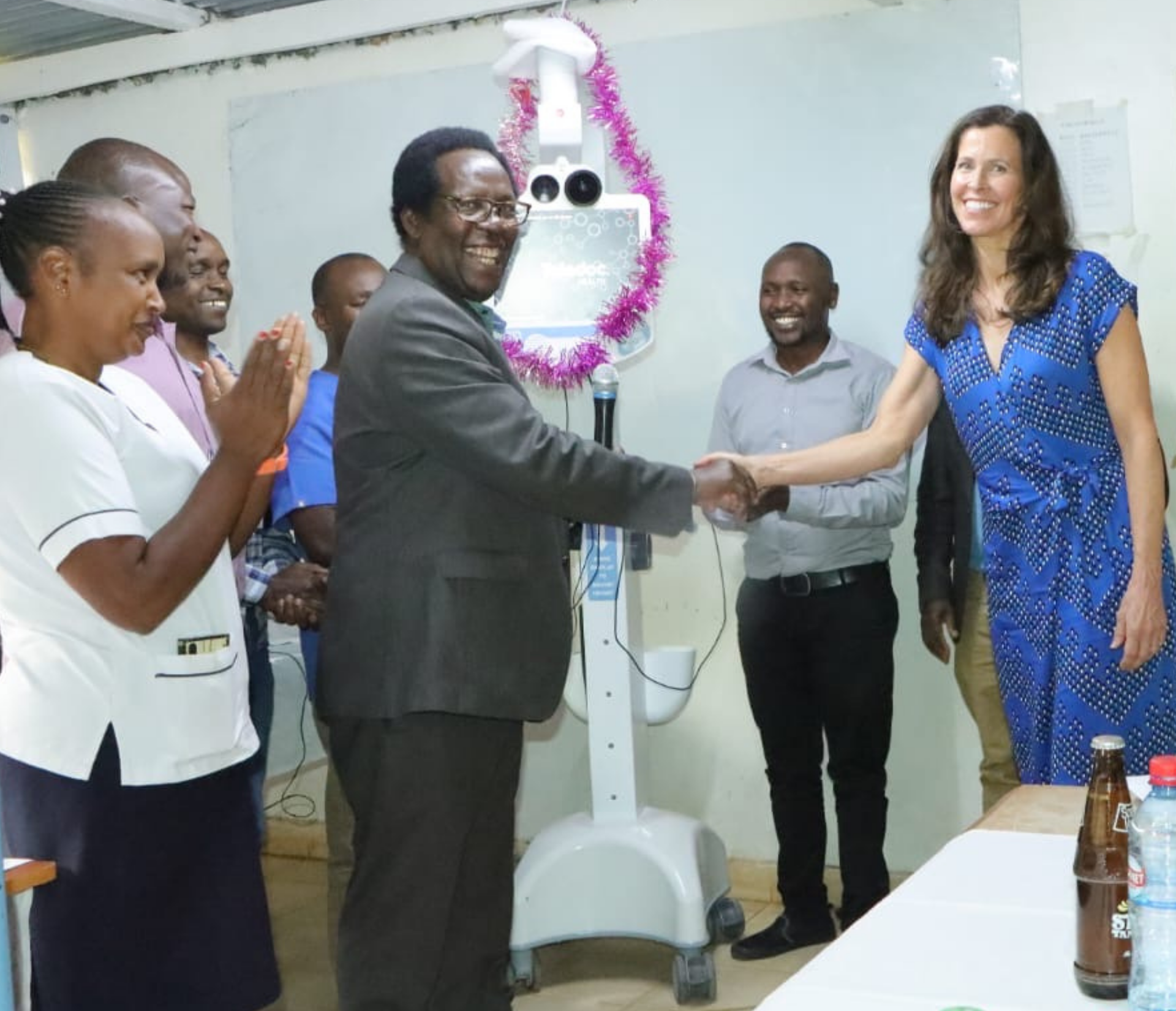
The WTI program launch celebration at Ndanai Hospital
In Kenya’s Rift Valley, improving healthcare access is not always straightforward. Despite limited infrastructure and connectivity challenges, the clinicians at Ndanai Sub-County Hospital remain determined to bring specialized care to the community they serve.
Serving more than 55,000 patients each year, Ndanai Hospital is a vital healthcare hub for residents across Bomet County. They play a critical role in caring for patients facing a wide range of health challenges, from malaria and HIV/AIDS to hepatitis and cancer. Financial barriers and shortages of healthcare workers place additional strain on the healthcare system.
Access to specialist care remains one of the hospital's greatest challenges. Patients who require advanced diagnostics or specialist consultations often must travel long distances to referral centers, a journey that can be prohibitively expensive, time-consuming, or simply impossible for many families.
Through World Telehealth Initiative (WTI), Ndanai now has access to a global corps of physicians and nurses who provide consultations, mentorship, lectures, and bedside teaching across multiple medical disciplines. The program is designed to improve patient outcomes, reduce unnecessary referrals, and strengthen continuing medical education for local healthcare workers.
Although, like many efforts to expand healthcare access in resource-constrained settings, the program encountered hurdles.
Internet connectivity at the hospital was inconsistent, with telehealth sessions initially plagued by service disruptions. The telehealth devices utilized by WTI are designed to operate on low-bandwidth, yet the internet challenges at the hospital were significant. Determined to find solutions, hospital leadership invested in Starlink to improve connectivity. However, the Starlink connection was quickly consumed by other critical technology at the hospital. Bandwidth limitations continued to create difficulties, yet the hospital team remained committed, with the shared belief in the program's long-term potential.
That commitment is evident among all the partners. Hillary Kipyegon, Ndanai’s IT specialist, returned to work while on leave to help troubleshoot connectivity issues and identify solutions and keep the telehealth program moving forward. His dedication reflects the perseverance that has defined the program from its inception.
WTI’s volunteer healthcare providers showed equal tenacity. Nurse Leanna Ross consistently supported the hospital through educational nursing sessions while helping hospital staff navigate technical challenges and maintain momentum.
WTI is also fortunate to partner with Teladoc Health, whose technology is the backbone for this work. Their renowned Product Specialist, Modupe Sofolabo, often shares his tips for boosting connectivity at our sites in challenging environments.
Building an impactful telehealth program in a resource-limited setting requires patience, creativity, and determination. Ndanai Sub-County Hospital has demonstrated all three. What began as a challenge of connectivity has become a story of commitment and innovation, resulting in a thriving telehealth program and a global community of healthcare professionals working together to expand access to quality care.